
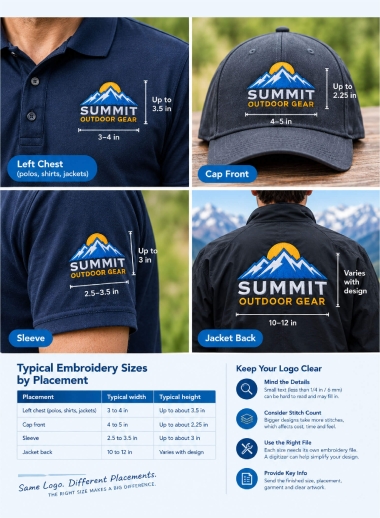
Why Size Matters More in Embroidery Than in Print
Ink can shrink to almost any size. Thread can't. Each stitch has a physical width, so details that print perfectly at 3 inches can merge into a blur when stitched.
Small lettering is the usual problem. As a general guide, text much smaller than about a quarter inch (6 mm) tall becomes hard to read and can fill in. Thin lines and tiny gaps between shapes have the same issue.
Size also changes the stitch count. A bigger design takes more stitches, which affects cost, sewing time and how stiff the finished logo feels on the fabric.
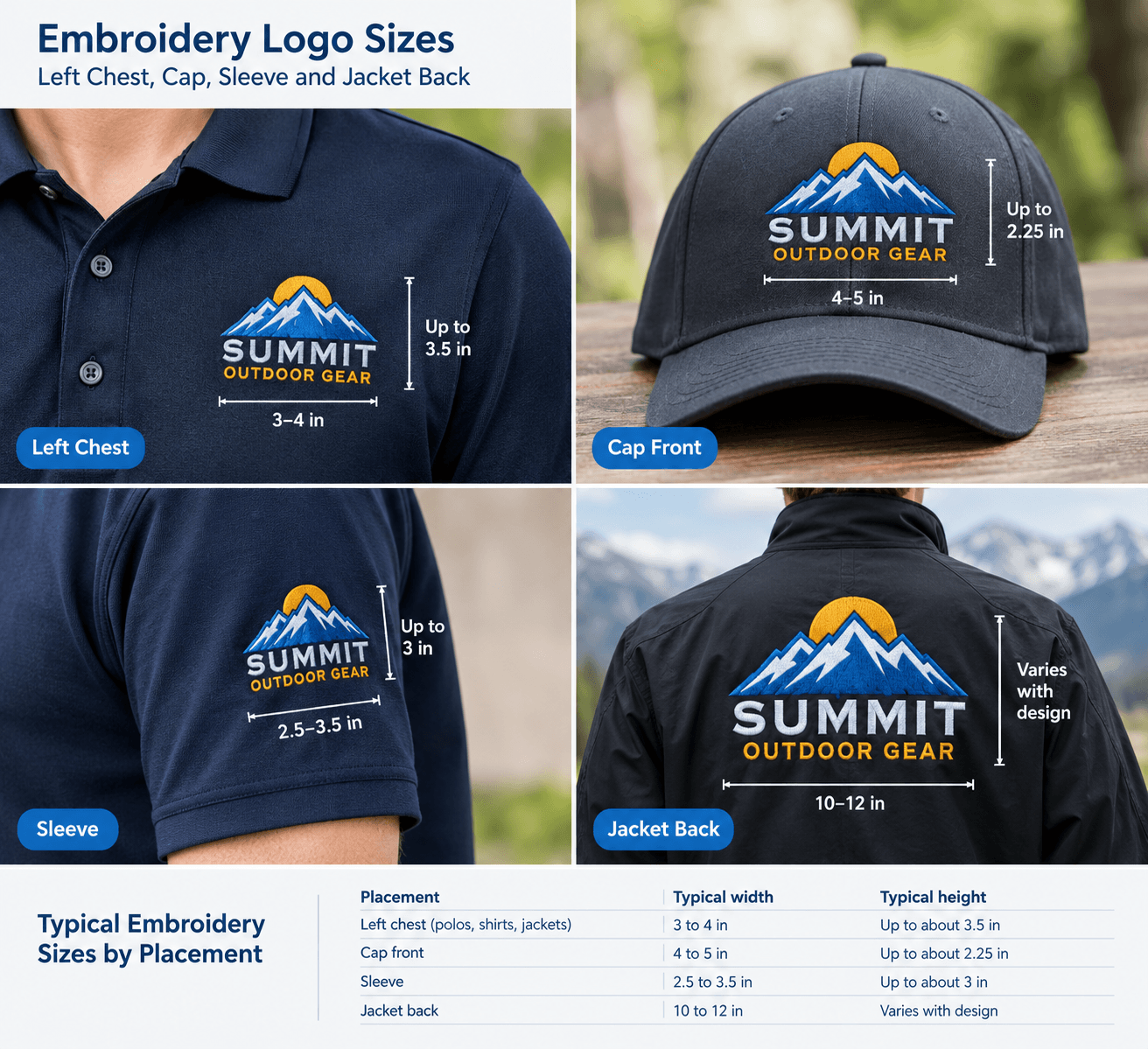
Left Chest Logos: Watch the Fine Detail
A wide, horizontal logo is the hardest to fit. Squeezed into a 4-inch width, its smallest text often drops below a readable size. Two simple fixes work well:
• Use a stacked version of the logo, with the icon above the name.
• Leave out the tagline or small print that won't survive at this size.
If your brand doesn't have an embroidery-friendly version yet, a digitizer can advise on what to simplify before stitching begins.
Caps Need Their Own File
A cap front is curved, and most structured caps have a center seam. A design digitized for a flat shirt can shift, pucker or sit off-center when it's sewn on a cap. Cap file are usually built to stitch from the center outward and from the bottom up, so the design stays aligned as the fabric moves. If you're ordering both shirts and caps, ask for a separate cap file rather than reusing the shirt version.
Jacket Backs: Bigger Isn't Always Better
Large designs open up room for detail, but solid fills over a large area add thousands of stitches. The result can feel heavy and stiff, like a patch. On large pieces, designs with outlines, open areas or appliqué often look better and wear more comfortably.
Give Your Digitizer the Right Information
An embroidery file is built for one size. Unlike a vector file, it doesn't scale cleanly; a large size change usually means the design should be digitized again. Our guide to converting a logo into an embroidery file explains why. Before ordering, have these ready:
1. The finished size in inches (width or height)
2. The placement, such as left chest, cap front or jacket back
3. The garment and fabric, for example a pique polo, a structured cap or a fleece jacket
4. The clearest artwork you have, ideally a vector file
At Mango Drawing, every design is digitized by hand for its placement and sewn out before delivery, so you receive a scan of the actual stitched result with your file, usually within 24 hours. Designs up to 10,000 stitches start at a flat $15, with no extra charge for minor edits or the sew-out.
Ready to stitch your logo? Request an embroidery digitizing quote with your artwork, size and placement.